I used to blame delays on weather and permits—until I watched how a single supplier tightened every weak link from drawing to pallet. I’m talking about Losier, a shop I now trust when a bracket, hinge, housing, or drive part has to work the first time. Their way of handling Construction and Building Hardware Casting doesn’t feel like a sales pitch; it feels like fewer emails, steadier schedules, and parts that bolt up without persuasion.
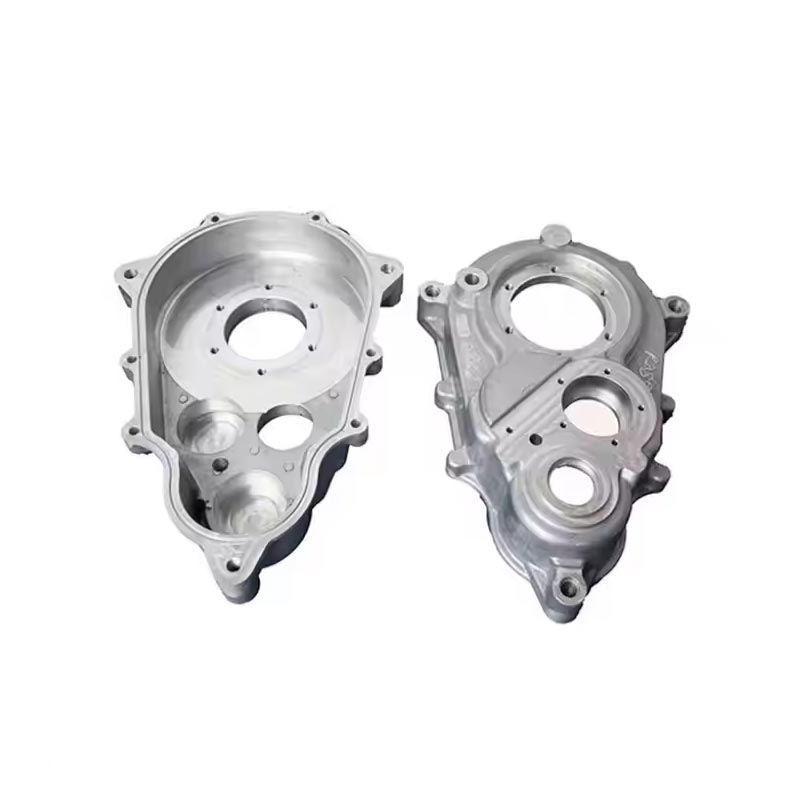
Why do I pivot to casting when fabrications start fighting the calendar?
-
One pour replaces multi-piece weldments, which cuts distortion and removes stack-up headaches.
-
Internal ribs and draft give me stiffness without weight spikes—great for motion and façade hardware.
-
Geometry repeats across batches, so field fit is predictable and rework bins stop filling up.
-
With custom casting support, I drop fasteners and shims from the BOM and the kit list stays simple.
Which material and process mix actually survives site conditions?
-
Ductile iron for shock and vibration in drivetrain brackets, reducer shells, and mount points—tough after targeted heat treatment.
-
Aluminum permanent-mold hardware where lift limits and corrosion matter; clean skin, consistent walls.
-
Stainless investment castings for splash zones and coastal installs; seals seat clean with light CNC precision machining.
-
Low-alloy steel for impact areas and structural connectors; properties tuned after the furnace, not guessed on paper.
How does Losier turn drawings into parts without drama?
-
DFM review focuses on draft, wall transitions, and fillets—issues die before tooling is cut.
-
Gating/solidification simulation trims porosity risk; samples land with data, not excuses.
-
Machined datums, bores, and threads are finished in one cell with tight quality assurance checkpoints.
-
Final touches—blast, coat, anodize, or plating—run as integrated surface treatment so cartons arrive install-ready.
-
If sub-frames or add-ons are required, in-house welding services keep geometry true and lead time linear.
Where do I see the biggest gains on real assemblies I ship and install?
-
Motion and drive hardware: reducer housings, bearing saddles, and torque arms that hold alignment under load.
-
Fluid handling: pump shells and impellers with smoother flow paths and tighter sealing faces.
-
Access and façade hardware: hinge knuckles, handrail bases, latch bodies that look clean and stay rigid.
-
Equipment frames and covers: mass where damping is needed, cut time where flatness matters.
-
Slewing and rotation parts: rings, carriers, and support plates that stay concentric after the first bolt torques down.
What advantages show up on my P&L, not just in the spec sheet?
|
Use case on my job
|
Typical examples
|
Losier route
|
Why it saves me time and money
|
|
High-load brackets with vibration
|
Engine supports, damper seats, torque links
|
Ductile iron casting + heat treatment + critical face CNC precision machining
|
Stable geometry, fewer shims, faster torque sequence, longer service life
|
|
Corrosion-exposed hardware
|
Handrail bases, valve and pump bodies
|
Stainless investment casting + passivation surface treatment
|
Cleaner sealing, less maintenance, consistent cosmetic finish
|
|
Weight-sensitive installs
|
Façade carriers, access hinges, cover frames
|
Aluminum permanent mold + powder coat
|
One-hand lifts, quicker rigging, uniform skin ready for coating
|
|
Precision gear and reducer parts
|
Gearbox shells, bearing seats
|
Near-net casting + bore and flange machining + CMM quality assurance
|
True alignment, fewer bearing failures, quieter operation
|
|
Late design, uncertain volume
|
Prototype hinges, latch bodies
|
Sand tool pilot → migrate to investment/permanent mold
|
Fast learning now, lower cost later without redrawing everything
|
How do I keep cost honest while performance climbs?
-
Machine only what seals, slides, or locates; leave the rest as-cast to protect budget.
-
Call out functional tolerances, not vanity numbers—Losier will flag safe relaxations.
-
Swap to smarter alloys before adding thickness; material beats mass when fatigue rules.
-
Plan batches that match pour size—supply chain management goes smoother and freight shrinks.
What do I send for a fast quote that doesn’t slip later?
-
3D with draft/fillets present, plus a clean PDF for notes and GD&T.
-
Critical faces and holes marked for CNC precision machining; cosmetic notes grouped with coatings.
-
Expected call-off cadence so tooling, stock, and inspection load can be scheduled.
Why trust one roof instead of five vendors?
Because a single PO at Losier covers melt, machining, coatings, kitting, and even light assembly. Integrated quality assurance means traceability never breaks, and tight surface treatment windows prevent corrosion creep. For architectural jobs, the result is reliable, good-looking architectural hardware that installers recognize and inspectors sign off without fuss.
Ready to swap fragile timelines for hardware that just fits?
If you’re weighing a switch or pushing a schedule that has no room for rework, I’m happy to walk your part from sketch to crate with Losier running the heavy lift—casting, machining, finishing, and verification under one plan. Tell me what the part must survive and where it lives; I’ll map the route, risks, and options in plain numbers. Send your files and contact us today to open a quote or place an inquiry—we’ll reply with a firm lead time, a clear price, and choices that keep your build moving.
Construction and Building Hardware Casting, CNC precision machining, surface treatment, welding services, heat treatment, quality assurance, custom casting, supply chain management, architectural hardware


