
As someone who has spent over two decades navigating the complex landscape of industrial manufacturing and supply chains, I’ve had a front-row seat to the critical decisions that define project success. One of the most fundamental and recurring questions we help our partners at Losier resolve is this: How do you choose between casting and forging for critical Machinery Part Casting and components? This isn't just academic; it’s a decision that impacts durability, cost, lead time, and ultimately, the performance of the entire industrial system. At Losier, we specialize in high-integrity Machinery Part Casting, and through years of collaboration with global engineering teams, we’ve honed a clear framework for making this choice. Let’s delve into the core of these two dominant manufacturing processes.
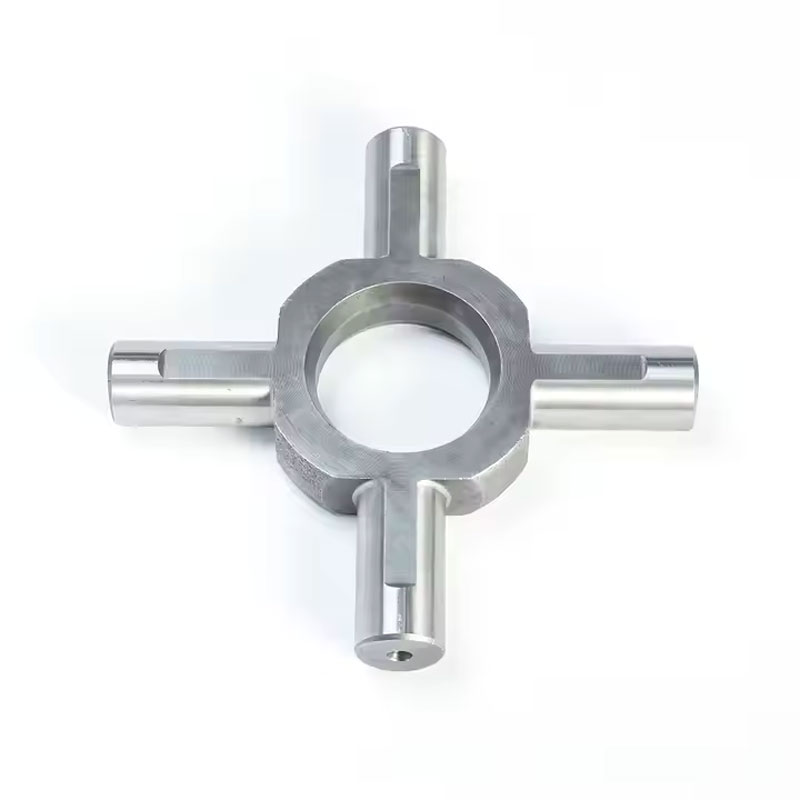
What Are the Foundational Principles of Casting and Forging
To understand the differences, we must first grasp the basic intent of each method. Machinery Part Casting involves pouring molten metal into a pre-shaped mold cavity and allowing it to solidify. It’s inherently a process of creating complex shapes by giving liquid material a defined space to form. Forging, in contrast, is a solid-state process. It involves heating a metal billet and then applying compressive forces—through hammers or presses—to deform it into the desired shape. This fundamental difference—liquid formation versus solid deformation—sets the stage for all subsequent variations in properties, applications, and economics.
How Do Material Properties and Internal Structure Compare
This is where the rubber meets the road. The internal grain structure of a metal part dictates its strength, fatigue resistance, and reliability.
In a forged part, the compressive forces align and refine the metal's grain flow, essentially following the contours of the part's shape. This creates a continuous grain structure that significantly improves mechanical properties, particularly impact toughness and fatigue strength. Think of it like the grain in a piece of wood that follows a curve—it’s naturally stronger.
In a Machinery Part Casting, the grain structure forms as the molten metal cools. It can be more random and is often coarser than forged grain. While this can be mitigated through advanced techniques and post-casting heat treatments, the inherent isotropic nature (uniform properties in all directions) of cast parts is generally different from the directional strength of forgings.
The table below summarizes this key dichotomy:
| Property Aspect | Forged Machinery Parts | Cast Machinery Parts (e.g., Losier Machinery Part Casting) |
|---|---|---|
| Grain Structure | Aligned, refined, directional | More random, can be isotropic |
| Overall Strength | Higher, especially tensile strength | Good, can be optimized for compression |
| Impact Toughness | Superior; ideal for shock loading | Good; dependent on alloy and heat treatment |
| Fatigue Resistance | Excellent due to continuous grain flow | Good; design and finishing are critical |
What Are the Practical Implications for Design and Complexity
Here, Machinery Part Casting often holds a distinct advantage. The mold-based process allows for the production of parts with intricate geometries, internal passages, and complex shapes that would be impossible or prohibitively expensive to forge. At Losier, we frequently produce large, sophisticated housings, valve bodies, and structural frames with integrated features through our Machinery Part Casting processes. Forging is typically better suited for parts with relatively simpler, solid shapes where the primary requirement is supreme structural integrity.
How Does Cost and Production Timeline Breakdown
This is a major client pain point we address daily. The cost structure for these processes differs significantly.
Tooling: Forging dies for complex shapes are extremely expensive and require long lead times to manufacture. Casting molds, especially for sand casting—a Losier specialty—are generally less costly and faster to produce.
Material Waste: Forging is a subtractive process; significant material can be lost as flash or in subsequent machining. Casting is closer to net-shape, meaning less initial material waste.
Production Volume: Forging becomes more economical at very high volumes where the high tooling cost is amortized. Machinery Part Casting offers excellent flexibility and cost-effectiveness across a wider range of volumes, from prototypes to large batch production.
| Economic Factor | Forging Process | Casting Process (e.g., Losier Service) |
|---|---|---|
| Initial Tooling Cost | Very High | Moderate to Low (process-dependent) |
| Lead Time for Tooling | Long | Shorter |
| Material Utilization | Lower (due to flash/trimming) | Higher (near-net-shape) |
| Economical Volume | Best for very high volume | Flexible: suitable for low to high volume |
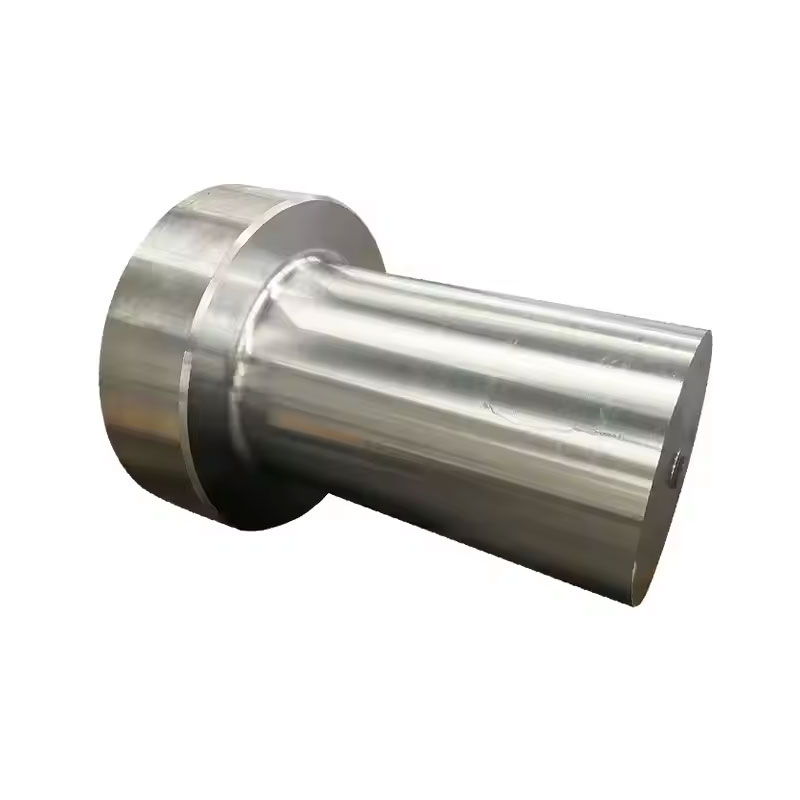
Which Process Should You Choose for Your Specific Application
The choice is rarely binary but dictated by the part's mission. Use forging when the component faces extreme, repeated stress: think crankshafts, high-pressure valve stems, heavy-duty connecting rods, or critical drilling equipment parts. Choose high-quality Machinery Part Casting for large, complex, or hollow shapes where design flexibility is key: think pump housings, machine tool bases, gearbox casings, or large mining machinery structural components. At Losier, our engineering support team specializes in guiding this decision, ensuring you get the optimal performance-to-cost ratio without over- or under-engineering the component.
What Are the Most Common FAQs About Machinery Part Casting
In my two decades, these are the questions I hear most often from engineers and procurement specialists:
FAQ 1: Is a cast part always weaker than a forged part?
Not necessarily. While forging generally produces higher tensile strength, modern Machinery Part Casting alloys and advanced heat treatment protocols can yield cast parts with exceptional strength and wear resistance suitable for a vast majority of industrial applications. The key is partnering with a foundry like Losier that has rigorous quality control and material certification.
FAQ 2: Can you achieve tight tolerances and good surface finish with Machinery Part Casting?
Absolutely. While as-cast parts have standard tolerances, precision machining is a standard subsequent step. At Losier, we offer fully machined, ready-to-install Machinery Part Casting components. Processes like investment casting or our proprietary sand-casting techniques can also yield excellent as-cast surface finishes.
FAQ 3: How do you ensure quality and consistency in high-volume Machinery Part Casting production?
This is the core of our value at Losier. We implement a multi-stage quality protocol that includes advanced mold and core design simulation, real-time pouring parameter monitoring, spectrographic alloy analysis, and non-destructive testing (like X-ray or ultrasonic inspection) on critical parts. Our statistical process control ensures batch-to-batch consistency you can rely on.
Where Do You Go From Here in Your Sourcing Journey
The casting vs. forging debate is solved not by a generic rulebook, but through a detailed analysis of your specific component’s function, load environment, and lifecycle cost. At Losier, we bring two decades of material science expertise and practical application knowledge to your table. We don’t just supply parts; we become an extension of your engineering team, ensuring the Machinery Part Casting solution you receive is robust, reliable, and optimized for value.
Have a specific component or a lingering question about your project’s best path forward? Contact us today for a confidential consultation. Let’s discuss your blueprints, your challenges, and how our Losier Machinery Part Casting expertise can bring unmatched reliability and efficiency to your industrial machinery.


