
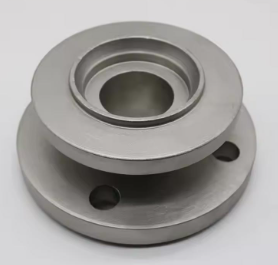
Losier is a professional China quality Alloy Steel Lost Wax Casting Mechanical Parts supplier. We are able to supply high-performance alloy steel components with extreme toughness, strengths and high precision. By utilizing the advanced lost wax method, we eliminate the structural limitations and shortage, able to manufacture intricate Mechanical Parts of Lost Wax Casting Investment with dense, non-porous alloy steel parts with high dimensional accuracy and excellent surface finish, eliminating the need for extensive secondary machining. We can provide complex shapes such as valve bodies, pump housings, and automotive brackets can be cast in one piece, ensuring structural integrity and consistent mechanical properties during use in different industrial appliacation.
Alloy Steel Lost Wax Casting Mechanical Parts provides exceptional hardness and impact resistance, allowing parts to operate under high-stress conditions that would cause standard carbon steel to fail.
The process maintains tight tolerances across complex batches, achieving near-net shapes that significantly reduce the need for expensive secondary machining and material waste.
With a surface finish range of Ra1.6-Ra3.2, our castings exhibit professional aesthetic quality and smooth functional surfaces, ideal for fluid equipment and mechanical assemblies.
Lost wax technology allows for the one-piece molding of intricate structures and internal cavities that are impossible to create through conventional CNC machining or forging.
The Alloy Steel Lost Wax Casting Mechanical Parts now are widely applied components:
Engine connectors, exhaust system components, and structural brackets that require a high strength-to-weight ratio and precise fitment.
Impellers, propellers, and high-pressure valve bodies that demand leak-proof density and corrosion resistance in fluid control systems.
Heavy-duty gears, joint connectors, and specialized brackets used in construction, mining, and automated production lines.
Hardware fittings and specialized structural parts designed to resist environmental wear and mechanical fatigue in offshore or energy facilities.
Professional engineering review of technical drawings followed by high-precision steel mold development to ensure production feasibility and dimensional stability.
Automated injection of wax models and tree assembly to maintain high batch consistency and minimize structural errors.
Multiple coatings of high-temperature refractory material create a robust shell. Molten alloy steel is poured under precise temperature control to ensure a dense, non-porous structure.
Removal of the ceramic shell followed by gate grinding, CNC finishing (milling, turning, tapping), and heat treatment to reach specified hardness levels.
Comprehensive pre-shipment testing including spectroscopic chemical analysis, X-ray flaw detection, and mechanical property verification.
Alloy Steel Lost Wax Casting, also known as precision investment casting, is an advanced manufacturing technique that involves creating a sacrificial wax replica of the desired component and coating it with multiple layers of high-grade refractory ceramic to form a robust mold. Once the wax is melted and removed, the resulting hollow cavity is filled with molten alloy steel—formulated with specific elements like chromium or molybdenum—under strictly controlled temperatures to ensure a dense, non-porous internal structure. This process is engineered to produce near-net-shape parts that achieve complex geometries, thin-walled sections, and high-precision tolerances that are impossible to reach through traditional forging or sand casting methods.
Unlike traditional sand casting, which often results in rougher surfaces and significant dimensional variance, Alloy Steel Lost Wax Casting Mechanical Parts offer a much finer surface finish and superior accuracy. Traditional sand casting is limited in its ability to reproduce intricate internal geometries and thin-walled sections, often requiring extensive post-processing machining. The lost wax method provides a denser metal structure with significantly fewer internal defects like porosity or sand inclusions, making it the preferred choice for critical components that require high reliability and minimal weight.
| Categories | Material | Features |
| Stainless Steel | 304, 316, CF8, CF8M, etc. | Corrosion resistant, high strength, suitable for medical, food, and marine hardware |
| Carbon Steel | WCB, 1020, 1045, etc. | Low cost, good strength, suitable for mechanical parts |
| Alloy Steel | 4130, 4140, 42CrMo, etc. | High wear resistance, high toughness, high strength |
| Heat-Resistant Steel | 1.4848, 310, 309, etc. | High temperature applications, such as boiler components |
| Copper | Brass H62, CuZn38 | Good electrical conductivity, suitable for valves and decorative parts |
| Bronze / Aluminum Bronze | AB2, 863 | Corrosion resistant, suitable for seawater environments |
| Aluminum Alloy | A356, ZL101, ZL114A | Lightweight, precision structural components |
| Manufacturing Process | Lost Wax Casting / Investment Casting |
| Dimensional Tolerances | VDG P690 D2 |
| Surface Roughness | Ra1.6–Ra3.2 |
| Maximum Size | ≤1200mm × 800mm × 400mm |
| Weight Range | 0.1kg–120kg |
| Annual Production Capacity | 3000 tons |
| Inspection Capacity | Full range of testing including dimensional analysis, spectral analysis, flaw detection, metallography, and mechanical properties |
| Drawing Format | JPG / PDF / DWG / DXF / IGS / STP / X_T / SLDPRT |


