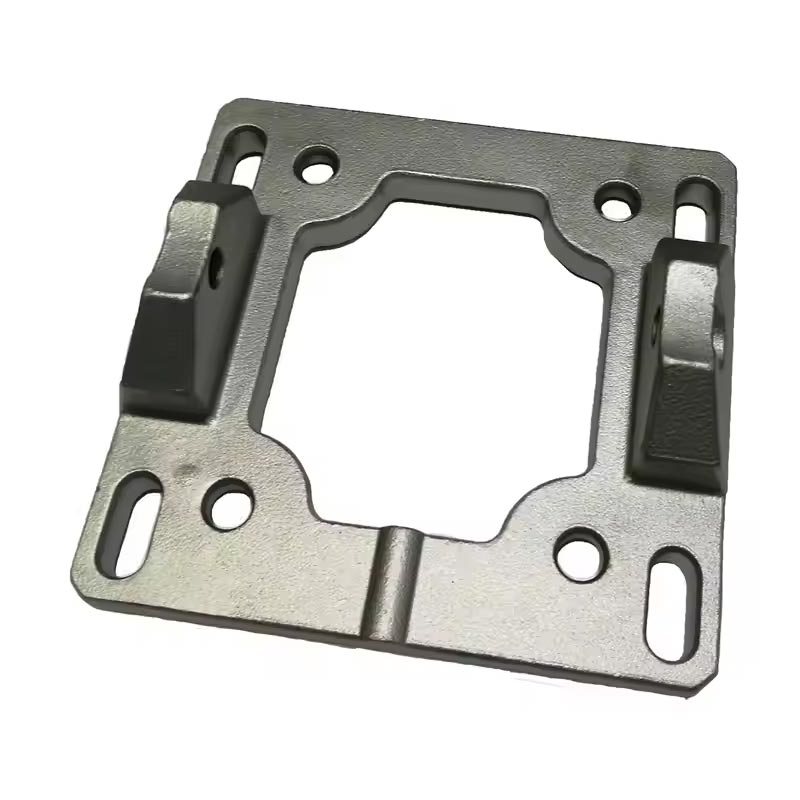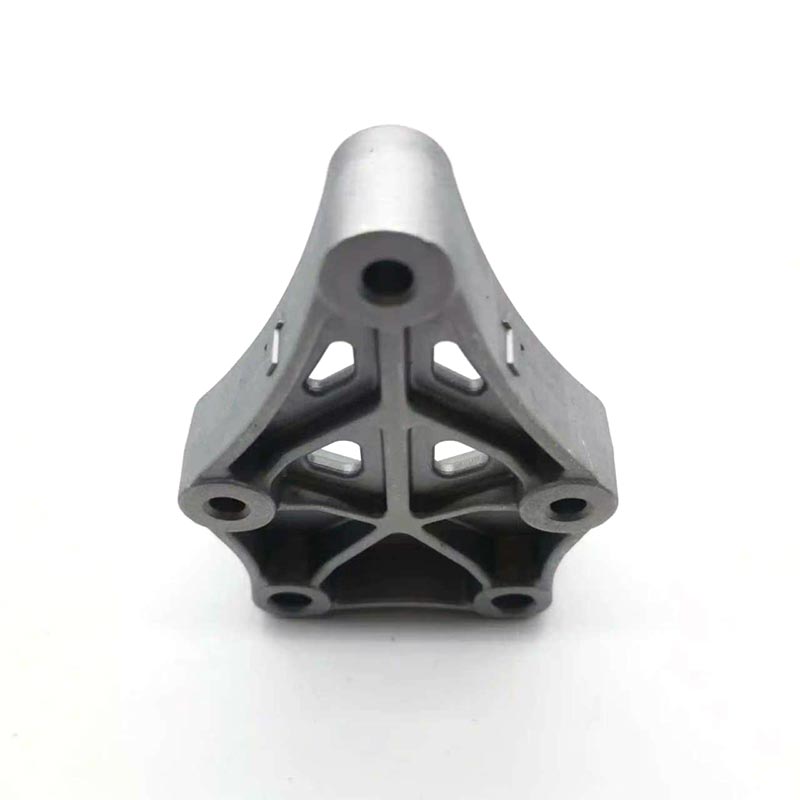
Losier is a leading China supplier of quality Heavy-duty Prototype Stainless Steel Lost Wax Investment Casting Hareware Parts . We focus on delivering high-performance components that demand extreme structural integrity and material precision. These heavy-duty parts are specifically engineered to withstand significant mechanical loads and corrosive environments, providing a near-net-shape accuracy (CT5–CT7) that traditional manufacturing cannot reach. By utilizing high-grade alloys, our Heavy-duty Prototype Stainless Steel Lost Wax Investment Casting Hareware Parts ensure exceptional durability and performance for industrial validation and functional testing.
These custom Heavy-duty Prototype Stainless Steel Lost Wax Investment Casting Hareware Parts of Losier are designed for heavy load applications where material reliability is a non-negotiable requirement. As a specialized manufacturer in China, Losier provides customized solutions from initial rapid prototyping to full-scale production. Each Parts unit undergoes stringent quality control, including non-destructive testing (NDT), to guarantee that the metallurgical properties of the stainless steel meet the rigorous demands of marine engineering, aerospace, and industrial machinery sectors.


These Heavy-duty Prototype Stainless Steel Lost Wax Investment Casting Hareware Parts achieves tolerances within CT5–CT7, which significantly reduces the time and cost associated with secondary machining while maintaining strict design parameters.
Produces a refined surface finish (typically Ra 3.2 or better), ensuring functional excellence and reducing the need for intensive post-processing grinding.
Supports the one-step molding of complex internal geometries and thin-walled structures that are difficult or impossible to achieve through solid machining.
Optimizes material usage to ensure cost efficiency for both prototype development and mass production without compromising structural strength.
In investment casting, Heavy-duty Prototype Stainless Steel Lost Wax Investment Casting Hareware Parts refers to components engineered to survive extreme operational conditions, such as high-pressure fluid systems, offshore chemical exposure, and heavy mechanical impacts. These parts often feature reinforced geometries and thicker wall sections compared to standard hardware. By choosing high-strength stainless steel grades, these castings maintain their shape and structural stability under loads that would cause standard materials to fail, making them essential for critical brackets, housings, and valve components.
The process allows for precise control over the metallurgical properties of the alloy, ensuring the prototype accurately reflects the performance of the final production part.
Lost wax casting produces parts as close to the final dimensions as possible, which is critical for heavy-duty prototypes that require testing in tight-tolerance assemblies.
Unlike sand casting, the investment process provides a denser internal structure with fewer defects, which is vital for parts subjected to high-pressure environments like our Heavy-duty Prototype Stainless Steel Lost Wax Investment Casting Hareware Parts.
Offers enhanced resistance to chlorides and chemicals, making it the ideal choice for marine or chemical processing prototypes.
A precipitation-hardening steel providing ultra-high strength and hardness, frequently used for load-bearing shafts and heavy structural brackets.
Combines exceptional pitting resistance with high yield strength for the most demanding subsea and industrial environments.
The standard for general structural components requiring good corrosion resistance and stable mechanical properties at a balanced cost.
The process handles parts ranging from several hundred grams up to 100kg, depending on the foundry's furnace and shell-building capacity.
Components can reach lengths of 500mm to 800mm. This capacity ensures that large-scale industrial hardware can still benefit from investment casting precision.
For prototypes exceeding these specific limits, sand casting is often evaluated as the alternative, though investment casting remains the priority for parts requiring superior detail.