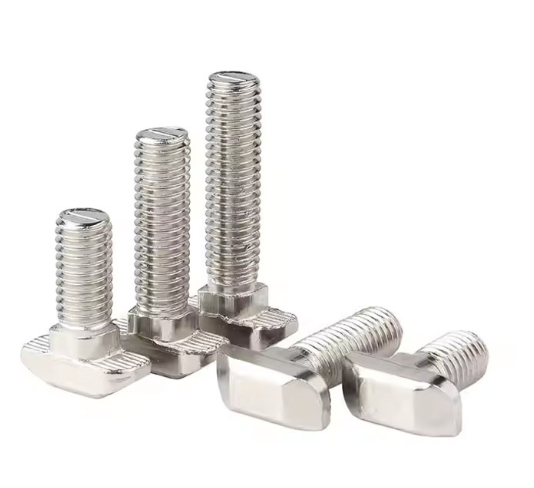
Cold forging stainless steel metal parts has become a cornerstone of high-performance manufacturing across automotive, aerospace, medical devices, and industrial machinery sectors. This article explores how the cold forging process enhances mechanical strength, dimensional accuracy, and surface finish while reducing material waste and production costs. It also addresses common buyer concerns such as material selection, manufacturing limitations, cost efficiency, and supplier evaluation. Whether you are an engineer, procurement manager, or product designer, this comprehensive guide will help you understand why cold forging is one of the most reliable solutions for producing stainless steel components with superior consistency and durability.
Table of Contents
1. Introduction to Cold Forging Stainless Steel Metal Parts
Cold forging stainless steel metal parts plays a critical role in modern precision manufacturing. Unlike traditional machining or casting, cold forging shapes metal under high pressure at or near room temperature. This process significantly improves the internal grain structure of stainless steel, resulting in stronger, more durable, and highly accurate components.
Industries today demand parts that are not only strong but also cost-efficient, corrosion-resistant, and capable of performing under extreme conditions. Cold forging meets these requirements by minimizing material waste and producing near-net-shape components that require minimal secondary processing.
2. What Are Cold Forging Stainless Steel Metal Parts?
Cold forging stainless steel metal parts are components formed by plastically deforming stainless steel billets or wire blanks without heating them to high temperatures. Instead, extreme mechanical force is applied using dies and presses.
This method enhances:
- Structural integrity
- Surface smoothness
- Dimensional precision
- Fatigue resistance
Unlike machining, which removes material, cold forging reshapes it, preserving more of the original metal and improving performance characteristics.
3. How the Cold Forging Process Works
The cold forging process involves several carefully controlled steps:
1. Material selection (stainless steel wire or billet)
2. Cutting to precise blank length
3. Lubrication for reduced friction
4. High-pressure forming using forging dies
5. Trimming excess material
6. Optional secondary finishing (threading, polishing, coating)
Each stage is optimized to ensure consistent mechanical properties and tight dimensional tolerances.
4. Key Advantages of Cold Forging Technology
Cold forging stainless steel metal parts offer multiple advantages that make them highly desirable in engineering applications:
-
Superior strength: Work hardening increases tensile strength
-
High precision: Tight tolerances reduce machining needs
-
Material efficiency: Minimal waste compared to cutting processes
-
Improved surface finish: Smooth surfaces reduce friction and wear
-
Cost savings: Lower material and machining costs in mass production
These benefits directly address common manufacturing challenges such as part failure, high production cost, and inconsistent quality.
5. Stainless Steel Grades Used in Cold Forging
Different stainless steel grades are selected based on application requirements:
|
Grade
|
Key Properties
|
Common Applications
|
|
304
|
Corrosion resistance, versatility
|
Fasteners, household hardware
|
|
316
|
Marine-grade corrosion resistance
|
Medical tools, marine parts
|
|
410
|
High hardness, moderate corrosion resistance
|
Cutting tools, industrial components
|
|
430
|
Magnetic properties, cost-effective
|
Appliance components
|
Choosing the correct grade ensures optimal performance and cost balance.
6. Industrial Applications and Use Cases
Cold forged stainless steel metal parts are widely used in:
- Automotive systems (engine fasteners, transmission parts)
- Aerospace assemblies (structural connectors)
- Medical devices (surgical instruments, implants)
- Electronics (precision connectors)
- Construction hardware (bolts, anchors)
- Industrial machinery (shafts, gears)
Their versatility makes them essential in both high-load and precision-demand environments.
7. Common Challenges and Buyer Pain Points
Despite its advantages, buyers often face challenges such as:
- Difficulty achieving complex geometries
- High initial tooling cost
- Limited design flexibility compared to machining
- Supplier inconsistency in quality control
- Material selection confusion
Understanding these issues helps companies make better procurement decisions and avoid production inefficiencies.
8. Quality Control and Precision Engineering
Quality assurance is critical in cold forging production. Manufacturers typically implement:
- Dimensional inspection using CMM systems
- Hardness testing
- Surface roughness measurement
- Microstructure analysis
- Batch consistency tracking
These procedures ensure that every cold forged stainless steel part meets strict industrial standards.
9. Design Considerations for Buyers and Engineers
When designing parts for cold forging, engineers should consider:
-
Uniform wall thickness
-
Avoiding sharp internal corners
-
Material flow direction
-
Tooling limitations
-
Production volume expectations
Proper design optimization can significantly reduce manufacturing costs and improve product performance.
10. Manufacturing Process Comparison Insights
Cold forging differs from other manufacturing methods in several ways:
|
Process
|
Strength
|
Precision
|
Cost Efficiency
|
|
Cold Forging
|
Very High
|
High
|
High (mass production)
|
|
Machining
|
Medium
|
Very High
|
Low (material waste)
|
|
Casting
|
Medium
|
Medium
|
Medium
|
Cold forging stands out for its balance of strength, precision, and scalability.
11. Cost Efficiency and Production Economics
While tooling investment for cold forging can be high initially, long-term production costs are significantly reduced due to:
- Reduced raw material waste
- Minimal machining requirements
- Faster cycle times in mass production
- Lower labor dependency
For high-volume manufacturing, cold forging becomes one of the most economical solutions.
12. Sustainability and Material Efficiency
Sustainability is increasingly important in manufacturing. Cold forging supports environmental goals by:
- Reducing scrap generation
- Lowering energy consumption compared to hot forging
- Extending product lifespan through improved strength
- Minimizing secondary processing steps
These benefits contribute to more sustainable industrial practices.
13. How to Choose a Reliable Supplier
Selecting the right manufacturer is crucial. Key evaluation factors include:
- Production capability and equipment level
- Material sourcing quality
- Certification standards (ISO compliance)
- Engineering support services
- Lead time reliability
- Customization capability
A strong supplier partnership ensures consistent product quality and long-term stability.
14. Frequently Asked Questions (FAQ)
Q1: What makes cold forging stronger than machining?
Cold forging improves grain structure through compression, enhancing strength without cutting the metal fibers.
Q2: Can all stainless steel be cold forged?
Not all grades are suitable; ductility and hardness must be balanced for successful forming.
Q3: Is cold forging suitable for small production runs?
It is most cost-effective for medium to large-scale production due to tooling costs.
Q4: How precise are cold forged parts?
They can achieve very tight tolerances, often reducing the need for secondary machining.
Q5: What industries benefit most from cold forging?
Automotive, aerospace, medical, and industrial machinery sectors benefit significantly.
15. Conclusion and Professional Support
Cold forging stainless steel metal parts continue to redefine modern manufacturing standards by combining strength, precision, and cost efficiency. As industries demand more reliable and high-performance components, this process remains a preferred solution for engineers and procurement professionals worldwide.
For customized cold forging stainless steel metal parts, engineering consultation, and reliable manufacturing support,
Cangzhou Losier Technology Development Co., Ltd. provides professional solutions tailored to your specific industrial needs.
If you are looking for stable quality, competitive pricing, and long-term partnership opportunities,
contact us today to discuss your project requirements and receive expert assistance.