
Losier analyzes core cost factors of its CNC Machining Part to help clients control small-batch and prototype manufacturing budgets.When prototyping or running small-batch production, one question comes up repeatedly: what drives the cost of a Machining Part? For engineers and project managers at firms , understanding this helps avoid budget overruns and delivery delays.
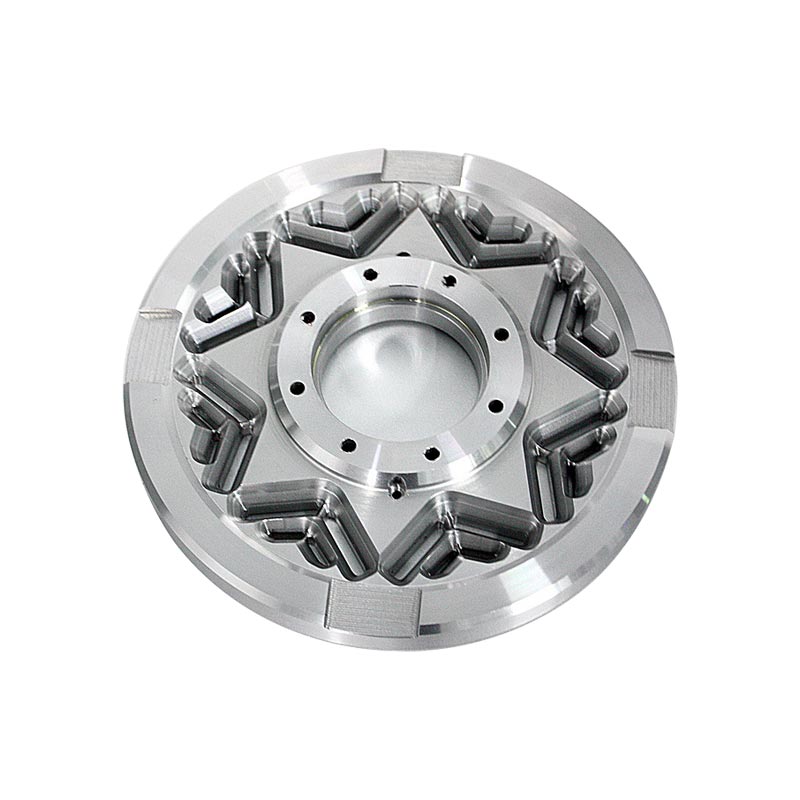
Many people assume that making a few dozen or a few hundred parts should be cheap. But low-volume production has its own cost structure. Unlike mass production where setup costs are spread over thousands of units, small batches carry fixed expenses that don't scale down easily.
Key cost components include:
- Programming and setup time
- Tooling selection and fixturing
- Material procurement (often in small quantities)
- Quality inspection per piece
- Machine runtime
For a typical CNC Machining Part, the average cost per unit can range from $50 to $500 or more, depending on complexity, material, and tolerances. But these numbers don't tell the full story.
The table below gives a practical overview of average cost ranges for low-volume CNC work (1–100 pieces). Keep in mind that these are industry estimates, not fixed prices.
| Part Complexity | Material Example | Setup Cost (USD) | Per-Unit Cost (USD, 10 pcs) | Total Estimate (10 pcs) |
| Simple (block, bracket) | Aluminum 6061 | $100–$200 | $15–$30 | $250–$500 |
| Medium (housing, mount) | Steel 1045 | $200–$400 | $40–$80 | $600–$1,200 |
| Complex (impeller, 5-axis) | Stainless 304 | $400–$800 | $100–$250 | $1,400–$3,300 |
These figures assume standard tolerances (±0.005 inch). Tighter tolerances or exotic materials like Inconel or titanium can double or triple the cost.
Every hole, thread, or curved surface adds machining time. A part with 50 features takes longer to program and cut than one with 10 features. Design simplification can reduce cost significantly.
Common aluminum or brass rounds are easy to source. But special alloys or large plates require extra cutting and handling. Some materials also need slower cutting speeds to avoid tool wear.
As-machined parts cost less than those requiring anodizing, polishing, or heat treatment. Each post-processing step adds lead time and expense.
For industries like medical devices or aerospace, full dimensional reports and material certifications are mandatory. These add quality assurance time.
Companies that specialize in low-volume work use several strategies to keep pricing reasonable:
- Standardized tool libraries – reduces tool change time
- Modular fixturing – quick setup for different parts
- CAM simulation – catches errors before cutting
- Batch sharing – combining multiple small orders from different customers into one machine run
Take Cangzhou Losier Technology Development Co., Ltd. as an example. With decades in casting and machining, they apply CAD-driven design and flexible manufacturing to avoid unnecessary setups. Their in-house quality team maintains a 96–98% first-pass yield, meaning fewer rejected parts and lower hidden costs.
Despite higher per-unit prices compared to mass casting or stamping, low-volume CNC is often the right choice when:
- Design iterations are still in progress
- Demand forecasts are uncertain
- Parts require tight tolerances or complex geometries
- Lead time must be short (days, not months)
A single CNC Machining Part produced in small quantity can save weeks of tooling development and thousands in upfront mold costs. For many engineering teams, that trade-off is well worth it.
From industry experience, these five practices lead to fairer pricing and smoother collaboration:
1. Provide a full 3D model – STEP or IGES files reduce interpretation errors.
2. Specify critical tolerances only – Overly tight dimensions everywhere raise cost unnecessarily.
3. Ask about material leftovers – using offcuts can lower material charges.
4. Combine multiple parts into one order – shared setup reduces per-part expense.
5. Request a design-for-manufacturing review – experienced shops often suggest small changes that cut cycle time.
Understanding the average cost of low-volume CNC production means looking beyond the price tag. Setup time, material choice, part complexity, and quality systems all play a role. A well-made CNC Machining Part from a capable partner saves rework, speeds up development, and delivers consistent results.
For aluminum, iron, steel, and precision-machined components, Losier combines foundry expertise with modern CNC capabilities. Their approach—grounded in quality systems, CAD design, and customer-focused service—offers a reliable path for low-volume needs without unnecessary markup or delays.


