
Precision, durability, and customization have become critical requirements in modern manufacturing industries. From automotive systems and heavy machinery to aerospace components and marine equipment, custom lost wax investment castings spare parts provide manufacturers with reliable solutions for producing complex metal parts with exceptional dimensional accuracy and surface finish. This comprehensive guide explores how investment casting technology works, why industries rely on it, and how businesses can reduce production costs while improving component performance.
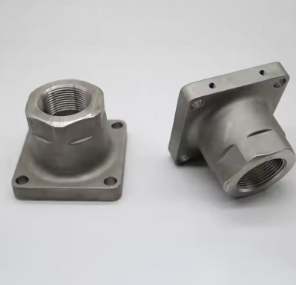
Custom lost wax investment castings spare parts are widely used because they offer precise dimensions, excellent surface quality, and the ability to manufacture complex geometries that are difficult to achieve through traditional machining methods. This article explains the complete investment casting process, material selection strategies, quality control standards, industrial applications, common buyer concerns, cost optimization methods, and how reliable manufacturers like Cangzhou Losier Technology Development Co., Ltd. help global clients obtain high-performance cast spare parts.
Lost wax investment casting is one of the oldest and most advanced metal manufacturing techniques used today. Although the process dates back thousands of years, modern engineering technologies have transformed it into a highly precise industrial solution for manufacturing intricate metal spare parts.
The method involves creating a wax model of the desired component, coating it with ceramic material, melting out the wax, and pouring molten metal into the resulting mold cavity. This process allows manufacturers to produce highly detailed components with minimal machining requirements.
Industries choose custom lost wax investment castings spare parts because they offer:
As manufacturing industries continue demanding lightweight, durable, and highly accurate components, investment casting remains one of the most dependable production technologies available.
Understanding the manufacturing process helps buyers evaluate quality standards and supplier capabilities. The investment casting workflow typically includes several critical stages.
| Process Step | Description |
|---|---|
| Wax Pattern Creation | Wax replicas are manufactured according to the component design. |
| Assembly | Multiple wax patterns are assembled into a tree structure. |
| Ceramic Shell Coating | The wax assembly is dipped into ceramic slurry repeatedly. |
| Dewaxing | The wax is melted and removed from the hardened shell. |
| Metal Pouring | Molten metal is poured into the ceramic cavity. |
| Cooling & Solidification | The metal cools and forms the final shape. |
| Shell Removal | Ceramic shells are broken away from the casting. |
| Finishing & Inspection | Grinding, machining, polishing, and quality testing are completed. |
Every stage directly affects the quality, strength, and precision of the final spare parts. Advanced manufacturers implement strict inspection systems throughout production to maintain consistency.
Many industries continue switching from conventional fabrication methods to investment casting because of the substantial technical and economic benefits.
Investment casting delivers tight tolerances that reduce or eliminate secondary machining operations.
Manufacturers can create intricate internal channels and detailed shapes impossible with many other methods.
Smooth surfaces minimize finishing work and improve appearance and functionality.
A wide range of ferrous and non-ferrous metals can be used depending on application needs.
Another major advantage is production scalability. Manufacturers can produce small prototype batches or large-scale industrial orders with stable quality levels.
Material selection determines corrosion resistance, heat tolerance, mechanical strength, and operational lifespan.
| Material | Main Advantages | Typical Applications |
|---|---|---|
| Stainless Steel | Corrosion resistance and strength | Valves, pumps, marine parts |
| Carbon Steel | High toughness and cost efficiency | Machinery spare parts |
| Alloy Steel | Wear resistance and durability | Mining and construction equipment |
| Aluminum Alloys | Lightweight and corrosion resistance | Automotive and aerospace components |
| Bronze & Brass | Excellent conductivity and wear properties | Marine and electrical applications |
Selecting the wrong material can lead to premature failures, corrosion issues, or excessive maintenance costs. This is why experienced engineering consultation is critical before production begins.
Investment cast spare parts are used across numerous industrial sectors because of their versatility and reliability.
As industrial systems become more advanced, the demand for precision-engineered spare parts continues increasing globally.
Manufacturers often compare investment casting with sand casting, forging, and CNC machining before selecting a production method.
| Manufacturing Method | Advantages | Limitations |
|---|---|---|
| Investment Casting | High precision and complex geometry | Higher tooling cost for initial setup |
| Sand Casting | Lower tooling cost | Rough surface finish and lower accuracy |
| Forging | Excellent mechanical strength | Limited shape complexity |
| CNC Machining | Very high precision | High material waste and machining time |
Investment casting often becomes the ideal balance between precision, cost control, and production flexibility.
Industrial buyers are highly concerned about consistency, structural reliability, and dimensional accuracy. Quality management therefore becomes a central part of the production system.
Reliable manufacturers generally implement:
Advanced quality systems help reduce defective products, improve operational safety, and increase long-term customer satisfaction.
Proper design optimization improves casting quality while reducing production costs and lead times.
Engineers typically focus on the following factors:
Well-designed castings reduce defects such as porosity, cracking, warping, and incomplete filling.
Many buyers assume high-quality investment casting automatically means expensive production. However, several strategies can significantly improve cost efficiency.
Efficient collaboration between buyers and manufacturers often creates substantial long-term savings.
Selecting the right supplier directly affects product reliability, delivery schedules, and project profitability.
When evaluating a casting manufacturer, buyers should consider:
Cangzhou Losier Technology Development Co., Ltd. specializes in manufacturing high-precision custom lost wax investment castings spare parts for global industrial clients. The company focuses on strict manufacturing standards, advanced processing technology, and customized engineering support to help customers improve operational efficiency and product performance.
The investment casting industry continues evolving through automation, digital engineering, and advanced material development.
Emerging trends include:
These innovations help manufacturers achieve better efficiency, improved sustainability, and enhanced product consistency.
The biggest advantage is the ability to manufacture highly precise and complex metal components with excellent surface finishes and minimal machining requirements.
Automotive, aerospace, oil and gas, marine, mining, medical, and food processing industries all rely heavily on investment cast components.
Yes. Stainless steel is one of the most widely used materials in investment casting because of its strength and corrosion resistance.
Yes. Investment casting supports both low-volume prototype production and large-scale industrial manufacturing.
Investment castings typically provide tighter tolerances and smoother surfaces than traditional sand casting methods.
Buyers should work with manufacturers that implement strict inspection systems including dimensional testing, material analysis, and non-destructive examination methods.
Custom lost wax investment castings spare parts continue playing a critical role in modern industrial manufacturing because they combine precision, durability, flexibility, and cost efficiency. As industrial equipment becomes more sophisticated, manufacturers increasingly depend on high-quality cast components to maintain operational stability and long-term reliability.
From material selection and engineering design to precision manufacturing and strict quality inspection, every stage contributes to the final performance of investment cast spare parts. Companies seeking dependable and customized casting solutions benefit greatly from working with experienced manufacturers that understand complex industrial requirements.
Looking for high-quality custom lost wax investment castings spare parts for your industrial projects? Cangzhou Losier Technology Development Co., Ltd. is committed to providing precision manufacturing solutions tailored to your exact specifications.
Contact us today to discuss your drawings, technical requirements, and production needs. Our professional engineering team is ready to help you achieve reliable performance, competitive pricing, and efficient global delivery.


