
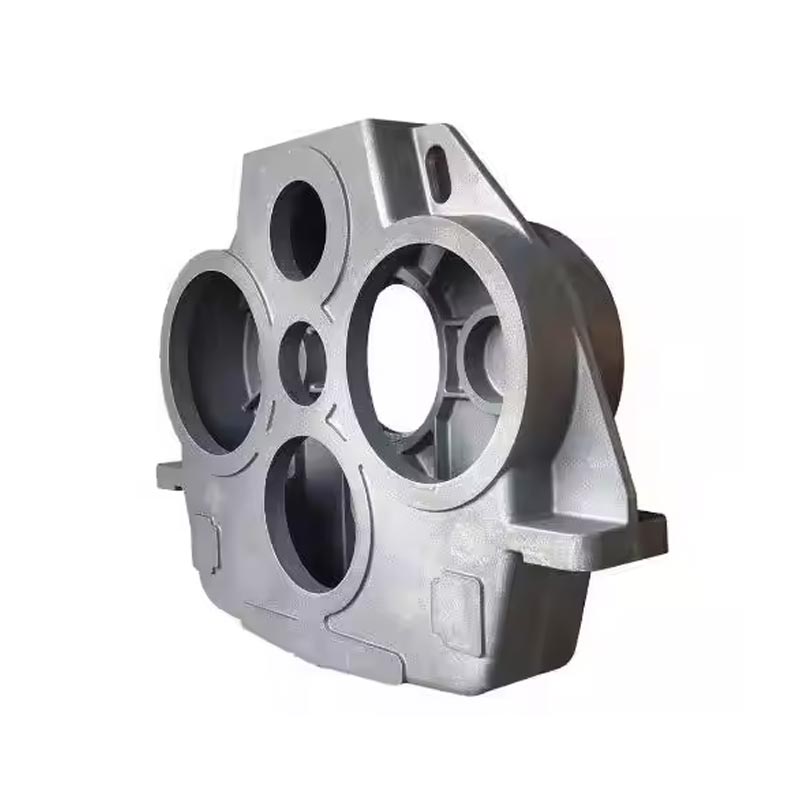
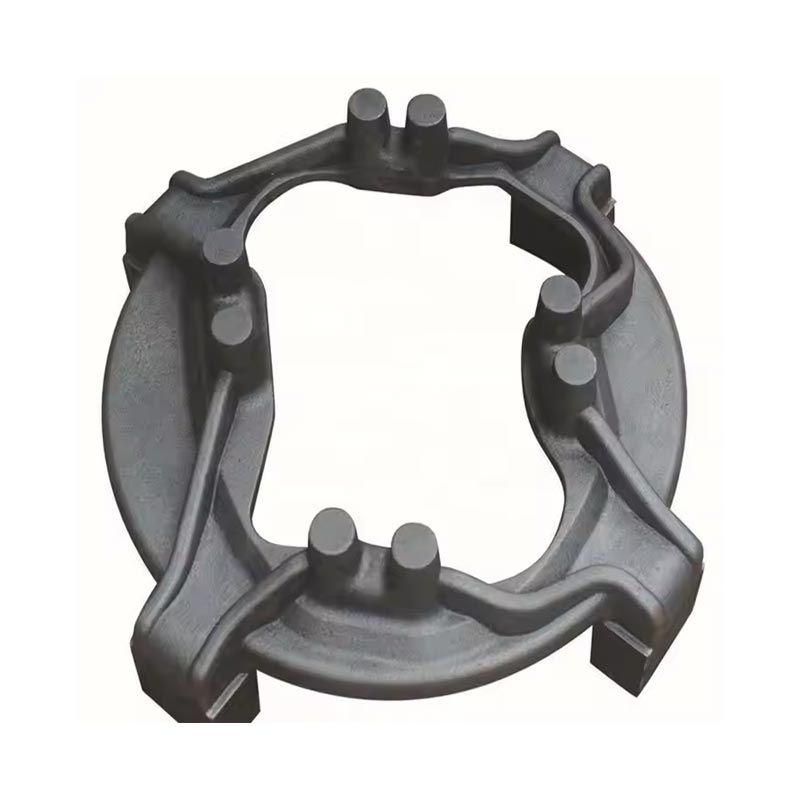
Shell Mold Sand Resin Casting Parts combine precision, efficiency, and versatility, delivering exceptional performance and reliability across a wide range of industrial applications. Featuring smooth, uniform surfaces, they significantly reduce the need for subsequent machining and surface finishing. These castings support a diverse array of metal materials, including carbon steel, alloy steel, stainless steel, aluminum, copper, and brass.
Shell Mold Sand Resin Casting Parts are precision metal components manufactured using a shell molding process, where resin-coated sand is heated and formed into a thin, high-strength shell mold. This advanced casting method provides better dimensional accuracy, smoother surface finish, and higher consistency compared to traditional sand casting.


The process is especially suitable for producing complex shapes and medium to large batch components with stable quality. It is widely used in industries such as automotive, machinery, valves, pumps, and industrial equipment where performance, durability, and cost efficiency are critical. By reducing machining requirements and improving production efficiency, Shell Mold Sand Resin Casting Parts offer a reliable and economical solution for customized metal casting needs.
The manufacturing of Shell Mold Sand Resin Casting Parts involves a precise and controlled process to ensure high accuracy and consistent quality.
Shell Mold Sand Resin Casting Parts are known for their precision, consistency, and efficiency, making them an ideal choice for industrial applications requiring high-quality cast components.
| Product Name | Shell Mold Casting |
| Brand | Losier |
| Origin | China |
| Process Support | Shell Casting, Sand Casting, Die Casting, Investment Casting, CNC Machining |
| Main Applications | Automotive, Shipbuilding, Valves, Pumps, Construction Machinery, Power, Agricultural Machinery, Hardware, etc. |
| Available Services | OEM, ODM, Custom Processing |
| Drawing Format | DWG, DXF, STEP, IGS, STL, 3DS, PDF, JPG, Sketches, etc. |
| Sample Lead Time | 1–3 days (without surface treatment) / 3–5 days (including surface treatment) |
| Minimum Order Quantity (MOQ) | Negotiable |
| Size Range | Manufactured according to your 2D and 3D drawings |
| Tolerances | ±0.02mm or as per drawing requirements |
| Casting Roughness | Ra 1.6–Ra 12.5 |


Shell Mold Sand Resin Casting Parts are produced by heating a metal pattern and coating it with resin-coated sand to form a shell mold. After curing, the mold halves are assembled, and molten metal is poured into the cavity. Once cooled, the shell is broken to retrieve the casting, followed by cleaning and finishing processes.
This process supports a wide range of metals, including carbon steel, alloy steel, stainless steel, cast iron, aluminum, copper, and brass, making it suitable for diverse industrial applications.
Compared to green sand casting, shell molding offers higher dimensional accuracy, smoother surface finish, and better consistency. Green sand casting, however, is more cost-effective for large and simple parts with lower precision requirements.
Shell molding typically involves higher tooling costs and is less suitable for extremely large castings. It is most efficient for medium to large batch production where precision and repeatability are critical.


